
We are very excited to welcome a new scientific project coordinator to our team: Tamanna Kalam, who will help facilitate collaboration and coordination across our various domains!
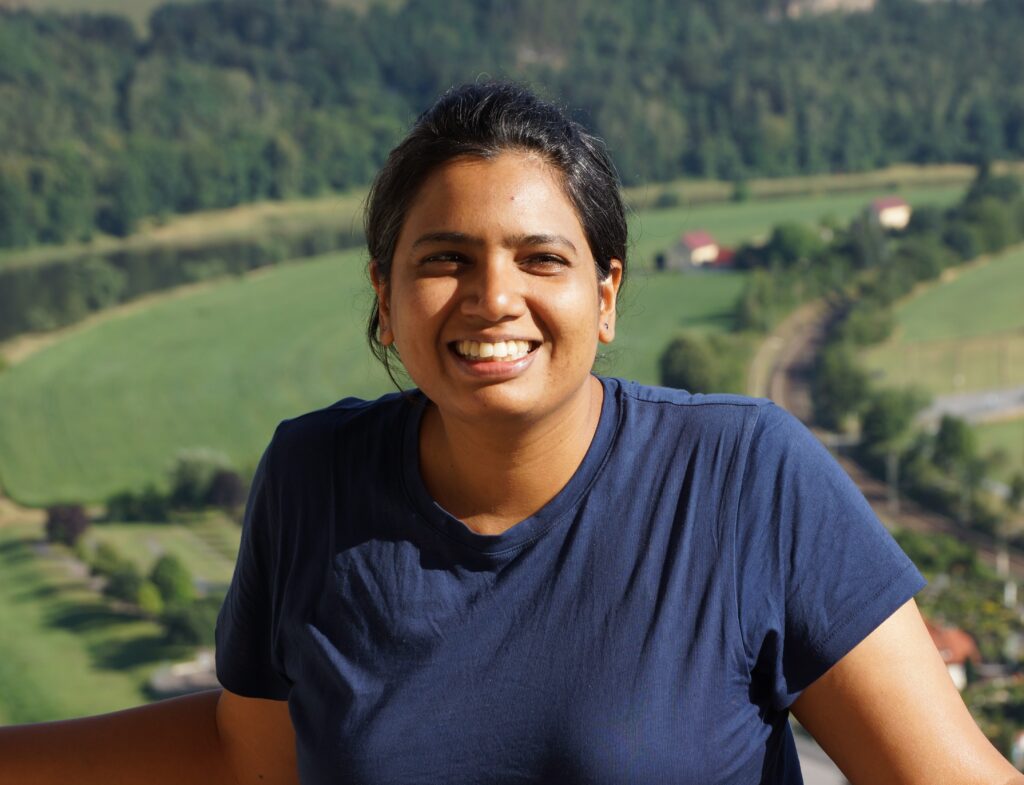
Tamanna is a conservation scientist whose research focuses on understanding how human pressures reshape ecosystems and drive the decline of wildlife populations and habitats across human-dominated landscapes. She holds a doctorate in Geography from Humboldt-Universität zu Berlin, where she reconstructed over a century of change in tropical dry woodlands in India to understand how habitat loss has shaped contemporary megafauna distributions. In earlier positions, she examined these drivers from different angles, including (i) mapping human-elephant conflict across tea plantations, (ii) using social surveys to study the effects of land use change on human-wildlife conflict, and (iii) using genetic analysis to understand how habitat fragmentation affects gene flow and connectivity among elephants.
Alongside her research, Tamanna has extensive experience in project coordination and research management, gained in international and interdisciplinary settings. Over the years, she has coordinated a wide range of activities, including organising and moderating scientific workshops and conferences, coordinating fieldwork and laboratory logistics, and leading outreach and fundraising teams across India. She also regularly engages in science communication and outreach, working with communities ranging from government agencies and indigenous groups to NGOs, corporates, and the general public, to translate conservation science into on-the-ground decisions.
Tamanna will be based at the Max Planck Institute of Geoanthropology in Jena. Along with Donovan, she supports the overall coordination and functioning of TIPMIP, and works more closely with the biosphere, permafrost, and ocean domains in particular.